
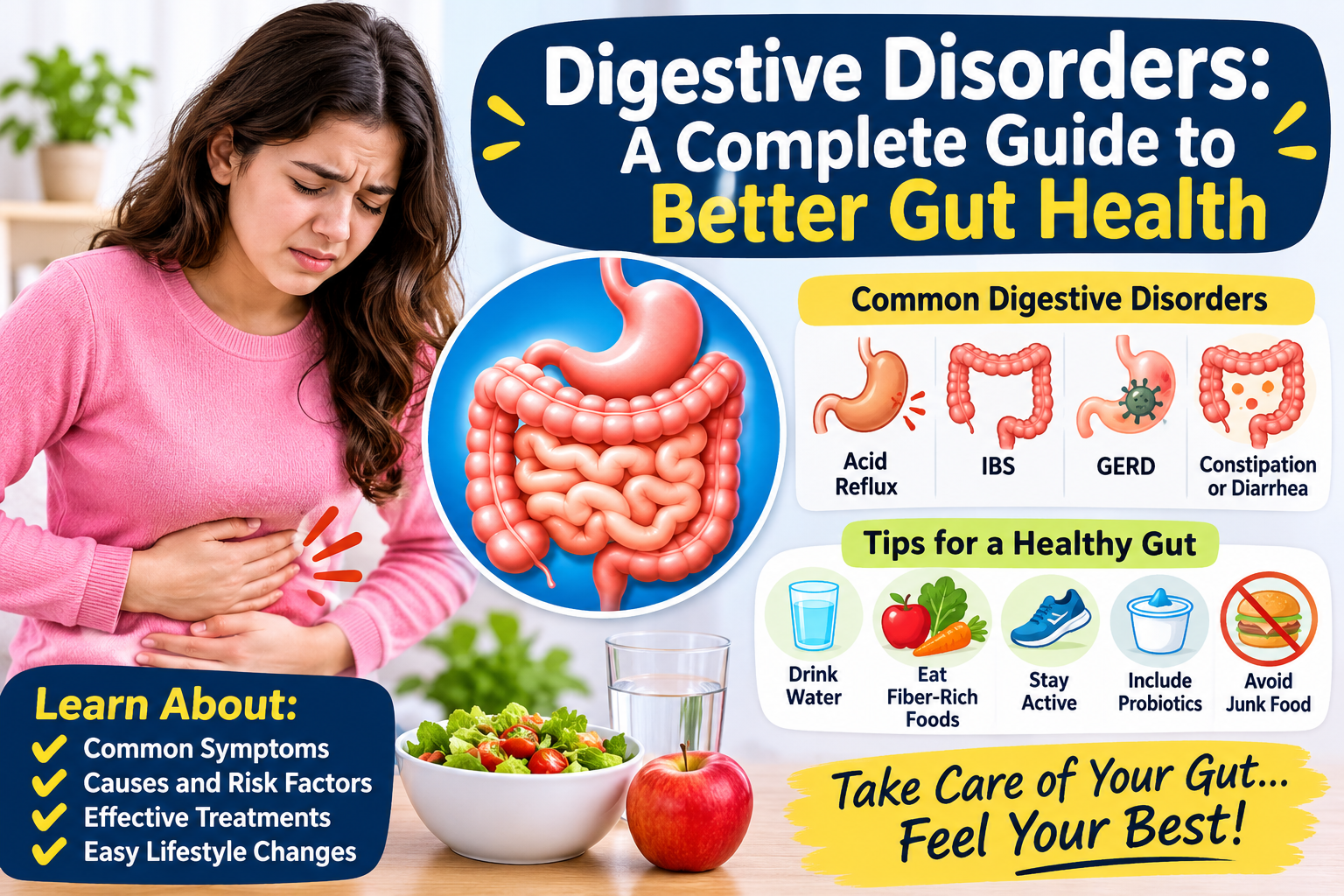

Digestive disorders can affect how your body breaks down food and absorbs nutrients. They can also cause pain, bloating, constipation, and other uncomfortable problems. Many people experience digestive trouble at some point in life. Some problems disappear quickly, while others need medical care.
Understanding digestive disorders can help you recognize early warning signs. It can also help you make better choices about food and daily habits. Your digestive system plays an important role in your overall health. It includes your mouth, stomach, intestines, liver, pancreas, and other organs. Each part has a special job. When one part does not work properly, digestive symptoms may appear. This guide explains common digestive conditions, their causes, symptoms, treatments, and prevention methods. You will also learn when professional medical advice is important.
You might also like

Digestive Disorders at a Glance
| Category | Details |
| Main topic | Digestive health |
| Common conditions | Acid reflux, IBS, constipation, ulcers, and celiac disease |
| Main symptoms | Bloating, stomach pain, diarrhea, and nausea |
| Common causes | Food intolerance, infections, inflammation, and lifestyle habits |
| Diagnosis | Medical history, physical examination, and selected tests |
| Treatment | Lifestyle changes, medicines, and condition-specific care |
| Prevention | Balanced eating, hydration, exercise, and good food hygiene |
| Medical support | Primary care doctors and gastroenterologists |
What Are Digestive Disorders?
Digestive disorders are health conditions that affect the digestive system. This system helps your body process food and use important nutrients. It also removes waste that your body does not need. Digestive problems can affect different organs and functions. Some conditions cause temporary discomfort after meals. Others can create ongoing problems that affect everyday activities. For example, someone with acid reflux may feel burning after eating. Another person may experience constipation or repeated stomach cramps. Digestive disorders can develop because of infections, inflammation, food reactions, or other health problems. Their severity can vary from mild to serious. Some conditions improve with simple lifestyle changes. Others require proper testing and medical treatment. Understanding your symptoms is an important first step toward better digestive health.
Common Types of Digestive Disorders
There are many conditions that can affect your digestive system. Each condition has different symptoms and treatment needs. Some affect the stomach, while others involve the intestines or other organs. Common digestive disorders include:
- Acid reflux: Stomach acid moves back into the food pipe.
- Irritable bowel syndrome (IBS): A condition that affects bowel habits.
- Constipation: Bowel movements become difficult or less frequent.
- Diarrhea: Loose or watery stools occur more often.
- Peptic ulcers: Open sores develop inside the stomach or upper intestine.
- Celiac disease: Gluten triggers an immune reaction that damages the small intestine.
- Inflammatory bowel disease (IBD): Long-term inflammation affects the digestive tract.
- Gallstones: Hard deposits develop inside the gallbladder.
- Lactose intolerance: The body struggles to digest milk sugar.
These conditions are not the same. They need different approaches to diagnosis and care.
Common Symptoms of Digestive Disorders
Digestive symptoms can appear in several ways. Some people experience mild discomfort after certain meals. Others deal with repeated symptoms that affect their daily routines. Recognizing these signs can help you understand when something needs attention. Common symptoms include stomach pain, bloating, gas, heartburn, and nausea. Some people also experience vomiting, diarrhea, or constipation. Changes in appetite can sometimes happen too. Certain conditions may cause unexplained weight loss or blood in the stool. These symptoms do not always mean something serious. However, repeated or worsening problems should not be ignored. Keeping a simple food and symptom diary can help identify possible patterns. Share this information with a healthcare professional during your appointment.
What Causes Digestive Disorders?
Digestive problems can develop for many different reasons. Sometimes, an infection affects the stomach or intestines. In other cases, the body reacts poorly to certain foods. Lifestyle habits may also contribute to digestive discomfort. Eating too quickly can increase swallowed air and bloating. Low fiber intake may make bowel movements harder. Not drinking enough water can also contribute to constipation. Stress can affect how the digestive system works. Some medicines may cause nausea, diarrhea, or other side effects. Family history can increase the risk of certain conditions. Smoking and excessive alcohol use may also harm digestive health. Finding the cause is important because similar symptoms can have different explanations. A doctor can help identify the problem.
How Food Choices Affect Digestive Health
Your daily food choices can influence how your digestive system feels. A balanced diet provides fiber, vitamins, minerals, and other nutrients. Fiber helps support regular bowel movements. You can find it in fruits, vegetables, beans, oats, and whole grains. Drinking enough water also supports healthy digestion. However, some foods may trigger symptoms in certain people. Spicy meals, fatty foods, dairy products, or caffeine can cause discomfort for some individuals. These reactions depend on the person’s condition and tolerance. You do not need to remove every food that causes occasional discomfort. Instead, notice which foods repeatedly create problems. Try making small changes and tracking your symptoms. A registered dietitian can help create a suitable eating plan.
Understanding Acid Reflux and Heartburn
Acid reflux happens when stomach contents move backward into the esophagus. This movement can create a burning feeling in your chest. Many people call this feeling heartburn. Other symptoms may include a sour taste, burping, or discomfort after meals. Symptoms can become worse when lying down soon after eating. Eating large meals may also trigger problems. Some people experience reflux occasionally. Frequent symptoms may indicate gastroesophageal reflux disease, commonly called GERD. Treatment can include smaller meals, avoiding personal food triggers, and changing meal times. Doctors may recommend medicines that reduce stomach acid. Long-lasting symptoms deserve medical attention. Chest pain should never automatically be blamed on heartburn. Seek urgent help when chest pain is severe or comes with breathing difficulty.
Irritable Bowel Syndrome and Its Effects
Irritable bowel syndrome is commonly known as IBS. It affects how the intestines function. People with IBS may experience stomach cramps, bloating, gas, diarrhea, or constipation. Some people alternate between diarrhea and constipation. Symptoms may come and go over time. Stress and certain foods can trigger symptoms in some individuals. However, IBS is different from inflammatory bowel disease. It does not cause the same type of intestinal damage. Doctors usually assess symptoms and medical history before making a diagnosis. Treatment may include dietary adjustments, stress management, and medication. Some people benefit from guidance on a low-FODMAP diet. This eating plan should ideally involve a qualified dietitian. A personal treatment plan can make daily life easier.
Constipation and Diarrhea: Two Common Problems
Constipation and diarrhea are common bowel problems. Constipation means bowel movements become difficult or less frequent. Stools may also become hard and dry. Low fiber intake, dehydration, inactivity, and certain medicines can contribute. Diarrhea involves loose or watery stools. It may happen because of infections, food reactions, medicines, or digestive conditions. Mild cases sometimes improve with home care. Drinking enough fluids is especially important during diarrhea. Severe dehydration needs medical attention. Persistent constipation also deserves professional advice. Avoid using laxatives regularly without understanding the cause. These problems can sometimes indicate another health condition. A doctor can recommend suitable treatment based on your symptoms and medical history.
Inflammatory Bowel Disease: Crohn’s Disease and Ulcerative Colitis
Inflammatory bowel disease, or IBD, causes ongoing inflammation in the digestive tract. Its two main forms are Crohn’s disease and ulcerative colitis. Crohn’s disease can affect different parts of the digestive system. Ulcerative colitis mainly affects the large intestine and rectum. Both conditions can cause abdominal pain, diarrhea, tiredness, and weight loss. Some people also notice blood in their stools. Symptoms may become worse during flare-ups. Other periods may bring fewer symptoms. IBD is different from IBS because it involves physical inflammation. Treatment may include prescription medicines, nutrition support, and sometimes surgery. Regular medical care is important. Early treatment can help control inflammation and reduce complications.
Food Intolerance and Food Allergies
Food intolerance and food allergies are different conditions. Food intolerance usually involves difficulty digesting certain ingredients. Lactose intolerance is one common example. It happens when the body does not produce enough lactase. This enzyme helps break down lactose in dairy products. Symptoms may include gas, bloating, and diarrhea. Food allergies involve an immune system reaction. They can cause hives, swelling, vomiting, or breathing problems. Severe allergic reactions can become life-threatening. Anyone experiencing breathing difficulty or throat swelling needs emergency medical help. Avoid guessing which condition you have. A healthcare professional can recommend suitable testing. Understanding the difference helps prevent unnecessary food restrictions. It also supports safer food choices.
How Are Digestive Disorders Diagnosed?
Doctors use several methods to identify digestive problems. The process usually starts with questions about your symptoms. They may ask when symptoms began and what makes them worse. Your medical history and family history can also provide useful information. A physical examination may help identify tenderness or swelling. Depending on your symptoms, the doctor may recommend additional tests. These can include blood tests, stool tests, breath tests, or imaging scans. Some people need an endoscopy or colonoscopy. These procedures allow doctors to examine parts of the digestive tract. Not everyone needs every test. The right approach depends on your symptoms and medical history. Accurate diagnosis helps guide safe and effective treatment.
Treatment Options for Digestive Disorders
Treatment depends on the exact condition and its severity. There is no single medicine that treats every digestive problem. Some people improve through changes in their eating habits. Others need prescription medicines or specialist care. Common treatment approaches include:
- Dietary changes: Adjusting fiber intake or avoiding confirmed food triggers.
- Medicines: Using appropriate treatments for acid reflux, infections, or inflammation.
- Hydration: Replacing fluids lost through diarrhea or vomiting.
- Lifestyle changes: Improving sleep, exercise, and stress management.
- Medical procedures: Treating certain ulcers, gallstones, or other complications.
- Nutrition support: Working with a dietitian when food restrictions are necessary.
Never start or stop prescription medicine without professional advice. The safest treatment plan depends on your diagnosis. Regular follow-ups can also help monitor progress and treatment results.
Natural Ways to Support Better Digestive Health
Healthy daily habits can support your digestive system. They cannot cure every medical condition. However, they may reduce certain symptoms and improve overall well-being. Start by eating a balanced diet with enough fiber. Add fruits, vegetables, and whole grains to your meals. Drink water throughout the day. Try eating slowly and chewing food properly. Regular physical activity can also support normal bowel movements. Walking after meals may help some people feel more comfortable. Manage stress through relaxing activities. Good sleep habits are important too. Avoid smoking and limit alcohol consumption. Remember that natural remedies are not always safe. Some herbal products can interact with medicines. Ask a healthcare professional before trying new supplements.
When Should You See a Doctor?
Occasional digestive discomfort may not require urgent treatment. However, repeated symptoms deserve attention. Make an appointment if you experience ongoing stomach pain, frequent heartburn, or persistent changes in bowel habits. Unexplained weight loss also needs medical assessment. Do not ignore repeated vomiting or difficulty swallowing. Blood in your stool should always be checked. Black, tarry stools can also indicate bleeding. Seek emergency medical help for severe abdominal pain, vomiting blood, fainting, or signs of serious dehydration. Severe chest pain or breathing difficulty also requires urgent care. Children, older adults, and people with existing health conditions may need extra attention. Early medical advice can help identify problems before they become more serious.
Can Digestive Disorders Affect Overall Health?
Yes, digestive problems can affect more than your stomach. Your digestive system helps your body absorb nutrients from food. These nutrients support energy, growth, and normal body functions. When digestion or nutrient absorption becomes poor, your body may not receive everything it needs. Some conditions can also cause dehydration, weakness, and unwanted weight changes. Ongoing digestive symptoms may affect sleep, mood, and daily activities. For example, someone with frequent diarrhea may feel tired throughout the day. A person with severe reflux may struggle to sleep comfortably. These effects depend on the underlying condition. Proper diagnosis and treatment can help protect your health. Paying attention to digestive symptoms is an important part of caring for your whole body.
Tips for Maintaining a Healthy Digestive System
You can support your digestive system through simple daily habits. Small changes are often easier to maintain than major diet changes. Try these practical tips:
- Eat fruits and vegetables every day.
- Choose whole grains when possible.
- Drink enough clean water.
- Eat meals slowly and chew properly.
- Exercise regularly.
- Avoid smoking and limit alcohol.
- Maintain a regular sleep schedule.
- Wash your hands before eating.
- Store and cook food safely.
- Seek medical advice for ongoing symptoms.
These habits can support healthy digestion and general well-being. However, they cannot prevent every digestive condition. Some illnesses develop because of genetics, immune system problems, or other factors. Do not ignore symptoms simply because you follow a healthy lifestyle. Regular medical advice remains important when problems continue.
Conclusion
Digestive disorders can affect people of different ages and lifestyles. Some problems are mild, while others require long-term medical care. Understanding their symptoms and causes helps you make informed health decisions. A balanced diet, regular exercise, enough water, and good sleep can support better digestion. However, lifestyle changes cannot replace medical treatment when a health condition requires it.
Pay attention to changes in your stomach and bowel habits. Keep track of foods that cause repeated discomfort. Speak with a qualified healthcare professional when symptoms continue or become worse. Never ignore warning signs like bleeding, severe pain, or unexplained weight loss. Your digestive health deserves regular attention. Start with small healthy habits and seek help when needed. What habits help you maintain better digestive health? Share your thoughts and experiences with others.
Frequently Asked Questions (FAQs)
1. What are the most common digestive disorders?
Some common conditions include acid reflux, constipation, diarrhea, IBS, and peptic ulcers. Celiac disease and inflammatory bowel disease are also important digestive conditions. Each problem affects the body differently. Some cause temporary discomfort, while others require ongoing medical care. A healthcare professional can help identify the condition and recommend suitable treatment.
2. What are the early signs of digestive disorders?
Early signs may include bloating, gas, stomach pain, heartburn, and changes in bowel movements. Some people also experience nausea or reduced appetite. These symptoms can happen for many reasons. Occasional discomfort does not always indicate an illness. However, repeated symptoms deserve medical attention, especially when they affect everyday activities.
3. Can digestive disorders be treated naturally?
Some digestive symptoms may improve through healthy eating, regular exercise, and proper hydration. Eating enough fiber can also support normal bowel movements. Stress management may help certain people with IBS symptoms. However, natural methods cannot treat every condition. Infections, ulcers, and inflammatory diseases may require medical treatment. Always discuss supplements or herbal remedies with your doctor.
4. Which foods are good for digestive health?
Fruits, vegetables, oats, beans, and whole grains provide useful fiber. Yogurt with live cultures may also suit some people. Water helps maintain normal digestion and supports bowel movements. However, food tolerance varies between individuals. Some people experience discomfort from dairy, spicy foods, or certain high-fiber ingredients. Choose foods that suit your body and medical needs.
5. When should I worry about digestive problems?
You should seek medical advice when symptoms continue, become worse, or affect daily life. Blood in your stool, unexplained weight loss, and difficulty swallowing need proper assessment. Severe abdominal pain, vomiting blood, fainting, or serious dehydration require urgent medical attention. Early evaluation can help doctors identify the cause and provide suitable treatment.
6. Which doctor treats digestive disorders?
A gastroenterologist is a doctor who specializes in digestive system conditions. They treat problems involving the stomach, intestines, liver, pancreas, and gallbladder. You can also begin with a primary care doctor. They may examine your symptoms and recommend further testing. The right specialist depends on your condition and medical needs.


