
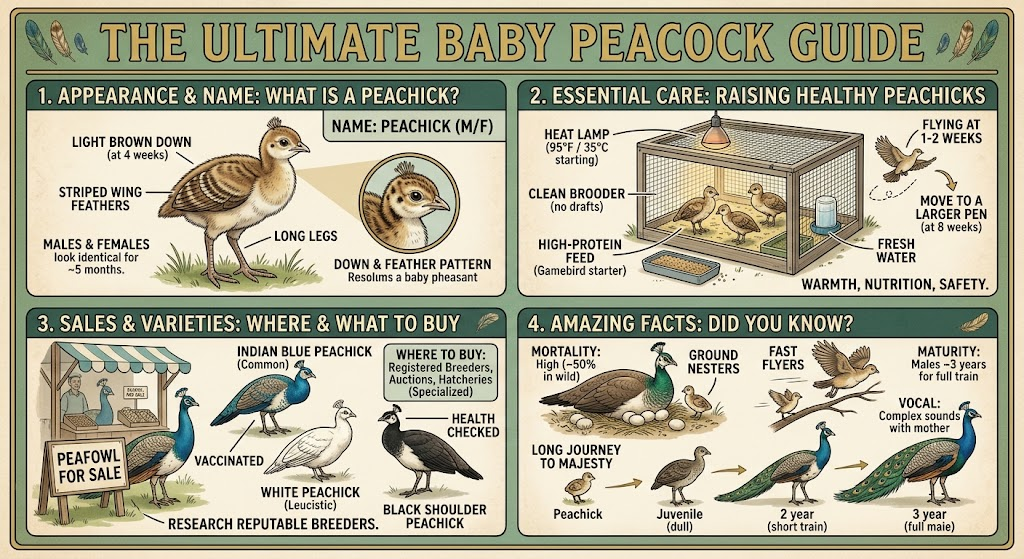

A baby peacock is one of the cutest sights in the bird world. These young birds have soft feathers, curious eyes, and quick movements. However, many people use the word “peacock” for all young peafowl. Technically, peacock means an adult male. Peahen means an adult female, while peafowl describes the species as a whole.
Young peafowl are often brown, tan, or gray. They do not have the bright blue and green feathers seen on adult males. Their colors help them blend into grass and plants. As they grow, their bodies become larger and their feathers change. A male develops the famous long train later in life.


This guide explains what does a baby peacock look like, what these birds are called, and how they grow. You will also learn about buying young peafowl and the unrelated baby peacock spider.
What Is a Baby Peacock Called?
A young baby peacock is commonly called a peachick. This name works for young peafowl before they become adults. The word is similar to “chick,” which describes many young birds. A peachick can be male or female, so the word does not tell you its sex.
People often ask, what is a baby peacock called because the word “peacock” technically refers to an adult male. A young female will later become a peahen. A young male will eventually become a peacock. Until they mature, both are peachicks.
Peachicks are active soon after hatching. They can walk and follow their mother at an early age. They still need warmth, protection, food, and clean surroundings. Their early weeks are important for healthy growth. Understanding the correct name also makes searching for care information much easier.
What Does a Baby Peacock Look Like?
So, what does a baby peacock look like? A young peachick usually looks very different from an adult male. Its feathers are often brown, tan, cream, or gray. These natural colors provide useful camouflage in outdoor areas.
A real baby peacock does not usually have the bright blue body of an adult male. It also does not have the famous eye-patterned train. Those features develop much later. Young birds have smaller wings, short tails, and fluffy-looking feathers.
Their appearance can vary based on age and individual coloring. Some peachicks may have stronger brown markings. Others may appear lighter or more golden. Looking at age is important when identifying a young bird. Very young chicks can also resemble other ground-dwelling birds at first glance.
Baby Peacock Growth and Development
A baby peacock changes quickly during its early life. The first stage focuses on staying warm, eating well, and avoiding danger. The chick follows its mother closely and learns by watching her behavior.
As the bird grows, its feathers become longer and more developed. Its body also becomes stronger. Young males and females can look quite similar during their early months. This makes sex identification difficult for inexperienced owners.
Male peafowl eventually develop stronger colors and longer feathers. Their famous train takes years to become fully impressive. Females generally keep a more modest appearance. Their natural colors help them stay less noticeable while nesting and raising young.
Growth depends on nutrition, genetics, environment, and overall health. Clean water and suitable food are important. Good shelter also protects young birds from cold weather, predators, and other threats.
Male Baby Peacock: How Can You Tell?
A male baby peacock can be difficult to identify when it is very young. Male and female peachicks may have similar colors and body shapes. Clear differences usually become easier to notice as the birds mature.
As a male grows, his feathers gradually become more colorful. His neck may develop stronger blue and green shades. His body also becomes larger and more striking. Later, he develops the long tail feathers associated with adult peacocks.
Young males do not immediately have the dramatic train seen in photographs. This is important for anyone considering a young bird. A small chick may look nothing like the adult male it will become.
If sex matters when purchasing a young bird, ask the seller how the bird was sexed. You should also ask about age, parentage, health, diet, and housing. Reliable sellers should be willing to explain these details.
Are Rare Baby Peacocks Real?
The phrase rare baby peacock can mean several things. It may describe an unusual color variety, a less common mutation, or simply a young bird that is uncommon locally. The word “rare” should not automatically mean valuable or special.
Some peafowl have unusual feather colors and patterns. These can include white, pied, and other recognized varieties. However, appearance alone does not prove a bird has a rare genetic trait.
Buyers should be careful with dramatic online claims. Ask for clear photographs and accurate information. You should also learn about the bird’s parents when possible. A trustworthy breeder should explain the bird’s variety without making unrealistic promises.
A real baby peacock should be evaluated as a living animal, not simply as a collectible. Its health, care needs, and welfare should come first. Beautiful coloring is only one part of choosing a healthy young bird.
Baby Peacock for Sale: What Should Buyers Know?
Searching for a baby peacock for sale can produce many different results. Before buying, first learn whether keeping peafowl is suitable in your area. Local rules, property size, neighbors, and housing conditions may affect your decision.
A healthy peachick should look alert and active. Its eyes should appear clear, and it should move normally. Ask about its age, diet, vaccination history, parents, and current housing.
Avoid rushing because a listing looks attractive. Photos can hide important details about a bird’s health or living conditions. Ask the seller for recent pictures and specific information about the bird.
You should also plan the enclosure before bringing the chick home. Young peafowl need protection from predators and harsh weather. They also need suitable food and clean water. Buying the bird should be the final step, not the first.
How to Care for a Baby Peacock
Caring for a baby peacock requires preparation. Young peachicks need a safe, warm, and clean place. They are more sensitive than adult birds, especially during their earliest weeks.
A secure brooding area can help protect young birds from cold temperatures. The enclosure should also stay dry and free from dangerous objects. Good ventilation matters, but direct cold drafts should be avoided.
Food should be suitable for young game birds or peafowl. Clean drinking water should always be available. Owners should avoid sudden diet changes because young birds can be sensitive to poor nutrition.
Watch the chick every day. Changes in appetite, movement, droppings, or behavior may signal a problem. When something seems wrong, contacting an avian or poultry veterinarian is the safest choice.
What Does a Peachick Eat?
A young peachick needs a balanced diet for proper growth. Many keepers use quality starter feed designed for suitable game birds. The exact feed should match the bird’s age and nutritional needs.
Fresh water is equally important. Water containers should be clean and positioned to reduce spills. Young birds can become weak quickly if they cannot drink properly.
Some owners offer additional foods as treats. However, treats should not replace a complete starter diet. Too many unsuitable foods can upset digestion or create nutritional problems.
The best feeding plan depends on the bird’s age and health. A knowledgeable breeder or avian veterinarian can help create a suitable routine. Good nutrition supports feather development, bone growth, and overall strength.
Baby Peacock Images: What Should You Look For?
People searching for baby peacock images often expect miniature versions of adult males. That is usually not what they will see. Young peachicks normally have muted colors and short feathers.
When comparing pictures, look at the bird’s age. A newly hatched peachick will look very different from a juvenile several months old. Lighting can also change how feathers appear in photographs.
Images can help with general identification, but they cannot confirm health. A photograph may not show movement, appetite, breathing, or behavior. These factors matter when evaluating a living bird.
If you are buying a peachick online, request current photographs. Ask the seller to provide several angles. A short video can also show how the bird walks and behaves. These simple steps can help buyers make better decisions.
How Long Does a Baby Peacock Stay Small?
A baby peacock does not stay tiny for very long. Young peafowl grow steadily during their juvenile period. Their bodies become stronger while their feathers gradually change.
Male birds take several years to develop their famous adult appearance. The long train is especially slow to develop. This means a young male may look plain for quite some time.
Female peafowl also mature gradually, but they do not develop the large male train. Their adult appearance remains more subtle.
Growth rates can vary between individual birds. Genetics, nutrition, weather, health, and living conditions can all influence development. Good care gives young birds the best chance to grow normally.
Baby Peacock Habitat and Housing
A suitable enclosure is essential for young peafowl. The space should protect them from predators, extreme weather, and unsafe objects. Strong fencing can help prevent escapes and unwanted animal attacks.
Young birds also need room to move. Crowded housing can create stress and increase hygiene problems. The enclosure should have a dry resting area and enough space for normal activity.
As the birds grow, their housing needs change. Adult peafowl require much more room than tiny chicks. Tall fencing may become important because peafowl can fly surprisingly well.
Cleanliness should be part of the daily routine. Remove wet bedding and spilled food when needed. Clean water containers regularly. A clean environment supports healthier birds and reduces avoidable problems.
Baby Peacock vs. Baby Peacock Spider
The baby peacock spider is completely different from a peachick. A peacock spider is a tiny jumping spider belonging to the Maratus group. It is an arachnid, not a bird.
The name comes from the colorful displays made by some male peacock spiders. These tiny spiders can raise and move parts of their bodies during courtship. Their movements can look surprisingly dramatic.
This creates an easy search mistake. Someone looking for baby peacock information may accidentally find photographs of peacock spiders. The two animals have no close relationship.
A peachick is a young bird. A peacock spider is a tiny arachnid. Their habitats, bodies, diets, and life cycles are completely different. Knowing this difference helps when searching for information online.
Is a Baby Peacock a Good Pet?
A baby peacock can be fascinating to raise, but it is not an easy household pet. Peafowl become large birds and need considerable outdoor space. They can also make loud calls.
Their long-term needs should be considered before purchase. Owners need suitable housing, food, protection, and regular care. Adult males can also display territorial behavior.
Peafowl may work better on appropriate rural or spacious properties. They are not usually suited to small indoor living. Neighbors should also be considered because their calls can carry a long distance.
Think about the adult bird before buying the chick. A tiny peachick will eventually become a much larger bird. Planning for its entire life is more responsible than focusing only on its cute appearance.
Common Baby Peacock Colors
Most young peachicks have natural brown, tan, cream, or gray coloring. These shades help them blend into their surroundings. Their early feathers are practical rather than flashy.
Some domesticated peafowl varieties can have different color patterns. White and pied birds are examples of varieties that may look different from typical Indian blue peafowl.
Color should not be confused with health. A colorful bird is not automatically healthier than a plain-looking bird. Buyers should focus on activity, body condition, clean eyes, normal breathing, and appropriate development.
When choosing a young bird, learn its variety from the breeder. Ask whether the color is established through known breeding lines. This can help prevent confusion about unusual or exaggerated sales claims.
Interesting Facts About Baby Peafowl
Young peafowl are active and observant birds. They can follow their mother and explore their surroundings soon after hatching. Their early development is fascinating to watch.
Peafowl belong to the pheasant family. The familiar Indian peafowl is native to South Asia. Adult males are famous for their colorful displays and large trains.
The word “peacock” specifically refers to males. “Peahen” refers to females. “Peafowl” is the broader term for both sexes.
A young bird is commonly called a peachick. This simple distinction makes many online searches easier. It also prevents confusion when discussing breeding, buying, and care.
Baby Peacock Biography and Quick Facts
Here is a simple baby peacock biography table for quick reference:
| Feature | Baby Peacock Facts |
| Common name | Peachick |
| Adult male | Peacock |
| Adult female | Peahen |
| Group name | Peafowl |
| Bird type | Ground-dwelling pheasant relative |
| Typical young color | Brown, tan, cream, or gray |
| Adult male colors | Blue, green, bronze, and other shades |
| Male train | Develops as the bird matures |
| Early diet | Suitable chick or game-bird starter feed |
| Main needs | Food, water, warmth, shelter, and protection |
| Natural behavior | Walking, foraging, exploring, and following the mother |
| Common concern | Predators and harsh weather |
| Suitable home | Spacious, secure outdoor enclosure |
| Lifespan | Can live for many years with proper care |
| Baby name | Peachick |
| Female adult name | Peahen |
| Male adult name | Peacock |
| Related search term | Baby peacock spider, which is a different animal |
Frequently Asked Questions
1. What is a baby peacock called?
A young peafowl is commonly called a peachick. The term can describe both young males and young females. As they mature, males become peacocks and females become peahens. This means “peachick” is the better term when talking about a young bird.
2. What does a baby peacock look like?
A young peachick usually has soft brown, tan, cream, or gray feathers. It does not normally have the bright blue body or long train of an adult male. Its appearance changes as it grows and develops adult feathers.
3. Can I buy a baby peacock for sale?
Young peafowl may be available from breeders and specialized bird sellers. Before buying, check local rules and prepare suitable housing. Ask about age, health, diet, parents, and sex. Avoid sellers who provide vague information or unrealistic claims.
4. How can I identify a male baby peacock?
Very young peachicks can be difficult to sex by appearance alone. Males become easier to identify as they mature. Their coloring and body features gradually become more noticeable. Ask an experienced breeder about reliable sexing methods for the bird’s age.
5. Is a rare baby peacock expensive?
An unusual color variety may cost more than a common bird. However, the word “rare” does not automatically prove high value. Buyers should confirm the bird’s variety, parentage, health, and age before paying a premium price.
6. Is a baby peacock spider actually a baby peacock?
No. A baby peacock spider is a tiny spider, not a young bird. Peacock spiders belong to the Maratus group of jumping spiders. The name comes from their colorful appearance and courtship displays. They are completely different animals from peafowl.
Conclusion
A baby peacock, more accurately called a peachick, looks very different from an adult male. Its early feathers are usually soft and muted. Its famous colors and long train develop much later.
Understanding the difference between a peacock, peahen, peafowl, and peachick makes identification easier. It also helps buyers make better choices when searching for young birds. If you are considering a baby peacock for sale, focus on health, housing, nutrition, and responsible care.
Remember that a young bird will eventually become an adult. Plan for its future needs before bringing it home. And if you came across the term baby peacock spider, remember that it describes a completely different animal.